

LoadingLaunches
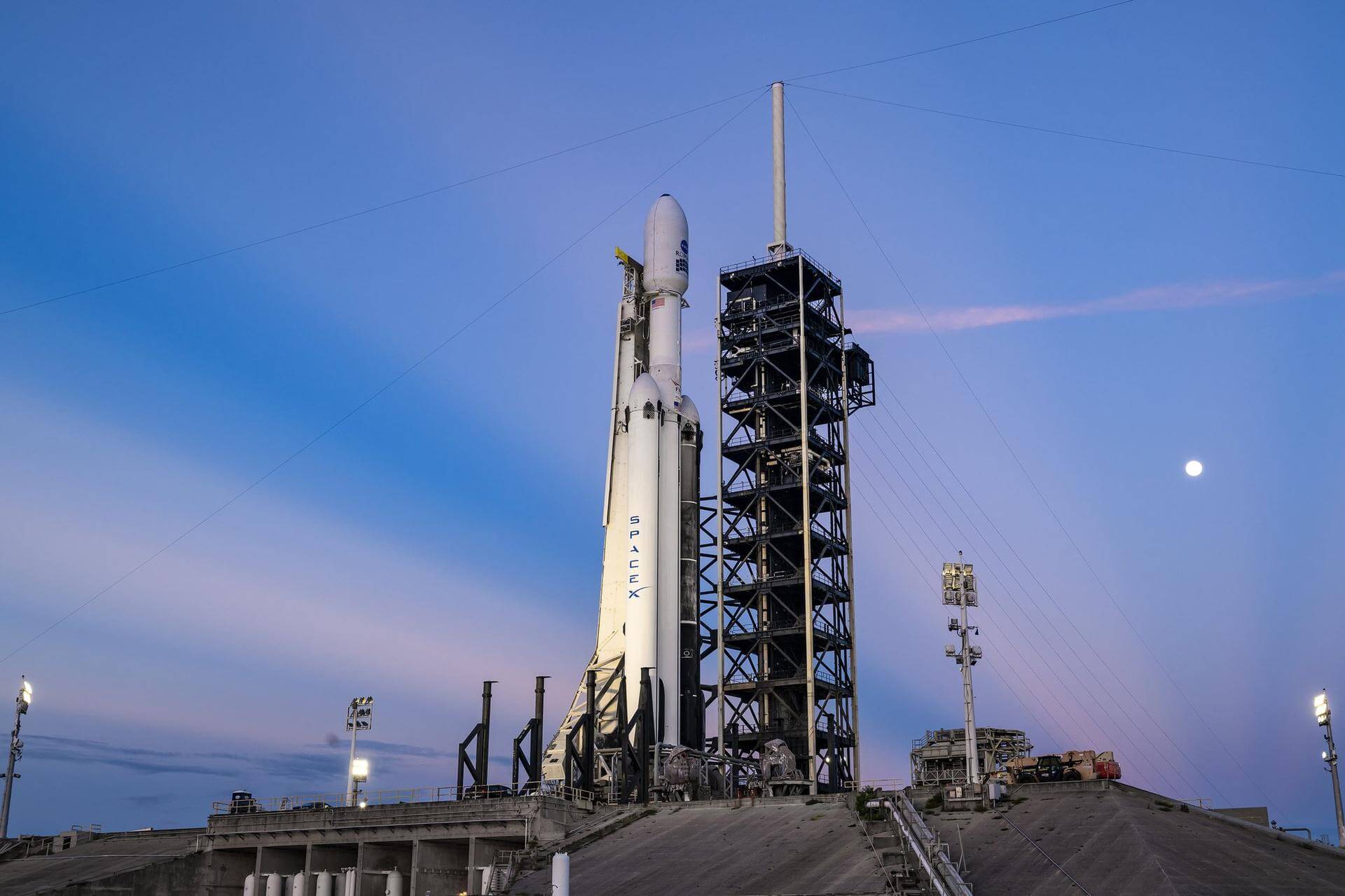
Nancy Grace Roman Space Telescope, Falcon Heavy
9 ft) wide field of view primary mirror and two scientific instruments. 28 square degree field of view, 100 times larger than imaging cameras on the Hubble.
The mission
LoadingCan I see it?
LoadingFlight path
LoadingThe rocket
Falcon Heavy is flown by SpaceX: 3 stages, with a reusable first stage. 14 flown · 14 successful.
Coverage
LoadingThe mission
The Nancy Grace Roman Space Telescope is a NASA infrared space telescope with a 2.4 m (7.9 ft) wide field of view primary mirror and two scientific instruments. The Wide-Field Instrument (WFI) is a 300.8-megapixel multi-band visible and near-infrared camera, providing a sharpness of images comparable to that achieved by the Hubble Space Telescope over a 0.28 square degree field of view, 100 times larger than imaging cameras on the Hubble. The Coronagraphic Instrument (CGI) is a high-contrast, small field of view camera and spectrometer covering visible and near-infrared wavelengths using novel starlight-suppression technology. Roman objectives include a search for extra-solar planets using gravitational microlensing, and probing the expansion history of the Universe and the growth of cosmic structure, with the goal of measuring the effects of dark energy, the consistency of general relativity, and the curvature of spacetime.
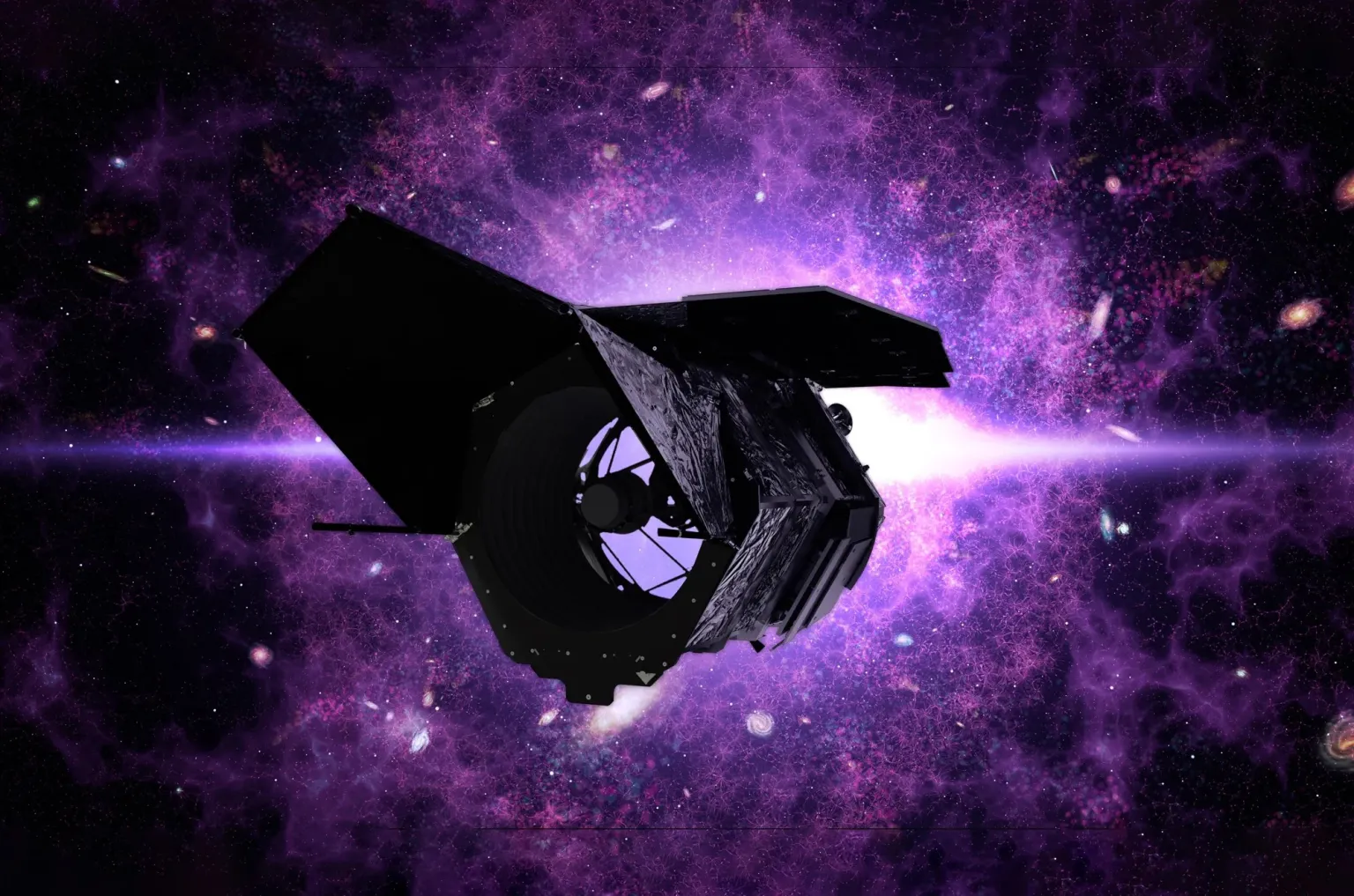
The Nancy Grace Roman Space Telescope is a NASA infrared space telescope based on an existing 2.4 m (7.9 ft) wide field of view primary mirror and carrying two scientific instruments. The Wide-Field Instrument (WFI) is a 300.8-megapixel multi-band visible and near-infrared camera, providing a sharpness of images comparable to that achieved by the Hubble Space Telescope over a 0.28 square degree field of view, 100 times larger than imaging cameras on the Hubble. The Coronagraph Instrument (CGI) is a high-contrast, small field of view camera and spectrometer covering visible and near-infrared wavelengths using novel starlight-suppression technology.
Coverage
My Personal Experience
By Boostey · Sep 3 · Photo: Chris LeymarieEvery source for this mission in one place: news, social, references, notes and the exact timeline.
Open the dossier
Falcon Heavy core booster expended during the launch of the Nancy Grace Roman Space Telescope.
Falcon 9 booster.
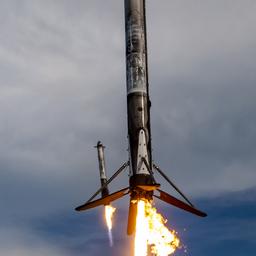
Falcon Heavy side booster first flown during the GOES-U mission.
Flight path
Falcon Heavy leaves LC-39A on a heading of 70°, toward the east-northeast.
Launch heading 70° · ENE from Nancy Grace Roman Space Telescope PO.
Pre-launch TLEs from Dillon's Space Page. Estimated before flight — the real orbit is confirmed post-launch.
Can I see it?
It's a daytime launch, so there's no twilight “jellyfish” plume this time.
Station KXMR, observed
METAR KXMR 200855Z AUTO 17008KT 6SM +RA BR OVC014 23/22 A2984 RMK AO2 CIG 002 RWY31 SLP108 P0115 60137 T02280216 57022